Image Source: http://media.tumblr.com/tumblr_ltfevjtSvA1qfraiz.jpg
California’s laws on private sector employment obviously start out as bills, which are sponsored and introduced by the men and women within the state’s Assembly and Senate. A lot of things happen when they get introduced; they either get shelved or get heard and voted amongst the committees within the legislative bodies for a certain period of time. When these bills are successfully heard and voted, what comes next is either a veto or a signature from the Office of the Governor of California.
Once signed, bills become laws and take effect on a certain date. But once they’re vetoed or denied, lawmakers either tweaked them and had them re-introduced or get shelved permanently. Such is the seemingly endless process of devising bills and legislative hearings within the California Assembly and Senate, and this year 2014 is like any other. Since the start of this year, nearly 2,000 bills have been introduced and re-introduced in both legislative bodies, many of which concern employment in the private sector.
With this in mind, it is worth mentioning some of the most notable and interesting bills that are currently pending in the California legislation. Below is a list of some of them:
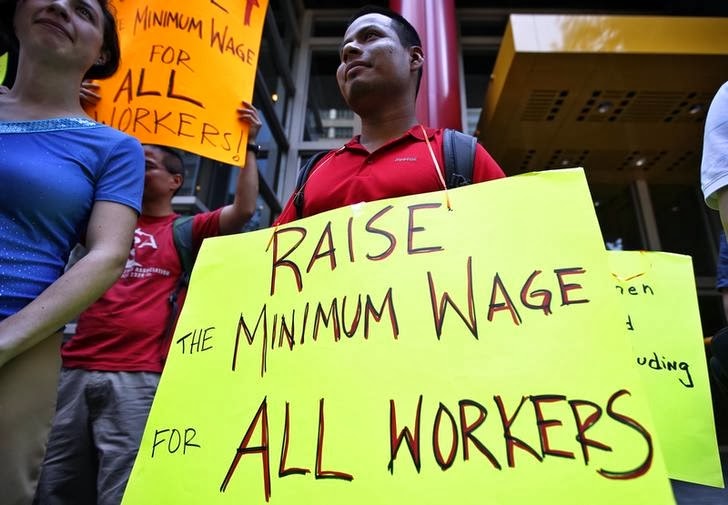
• Senate Bill 935. Last year, Assembly Bill 10 was passed which would provide an increase in the minimum wage rates in California from 2014 to 2016. Under said law, the $8.00-per-hour minimum wage would be $9.00-per-hour on July 1, 2014, and $10.00-per-hour on 2016. Interestingly, Senate Bill 935 would further increase the wage rates. Under this proposed bill, the minimum wage in California will be increased to $11.00 on and after January 1, 2015. By 2016, the rate will be at $12.00-per-hour, and by 2017, the rate will be at $13.00 per hour. It was recently amended by its principal authors and is being heard in the state’ Senate.
• AB 1443. If passed, this would amend the California Fair Employment and Housing Act (FEHA), the premiere state statute that prohibits employment discrimination. Under this proposed bill, employers covered by the FEHA cannot discriminate against an individual who is selected or trained as an unpaid intern on the basis of any of the protected characteristics defined under the law. It is currently being heard in the Assembly floor, recently with the Labor and Employment Committee.
• AB 1522. This bill proposes that a California employee working for seven or more days in a calendar year can be entitled to paid sick days. These are accumulated “at a rate of no less than one hour for every 30 hours worked.” Sick days can be requested beginning on the 90th calendar day of employment, whenever an employee needs to be diagnosed or treated of his or her health condition, attend to a sick family member, or to take a day off due to domestic violence, sexual assault, or stalking. Said bill is currently pending at the Assembly Labor and Employment Committee.
According to a Los Angeles employment lawyer, the abovementioned bills, if passed in the near future, would create a significant impact on the landscape of private sector employment in California. But then, these bills would still undergo hearings and votes as the legislative sessions continue.
Once signed, bills become laws and take effect on a certain date. But once they’re vetoed or denied, lawmakers either tweaked them and had them re-introduced or get shelved permanently. Such is the seemingly endless process of devising bills and legislative hearings within the California Assembly and Senate, and this year 2014 is like any other. Since the start of this year, nearly 2,000 bills have been introduced and re-introduced in both legislative bodies, many of which concern employment in the private sector.
With this in mind, it is worth mentioning some of the most notable and interesting bills that are currently pending in the California legislation. Below is a list of some of them:
• Senate Bill 935. Last year, Assembly Bill 10 was passed which would provide an increase in the minimum wage rates in California from 2014 to 2016. Under said law, the $8.00-per-hour minimum wage would be $9.00-per-hour on July 1, 2014, and $10.00-per-hour on 2016. Interestingly, Senate Bill 935 would further increase the wage rates. Under this proposed bill, the minimum wage in California will be increased to $11.00 on and after January 1, 2015. By 2016, the rate will be at $12.00-per-hour, and by 2017, the rate will be at $13.00 per hour. It was recently amended by its principal authors and is being heard in the state’ Senate.
• AB 1443. If passed, this would amend the California Fair Employment and Housing Act (FEHA), the premiere state statute that prohibits employment discrimination. Under this proposed bill, employers covered by the FEHA cannot discriminate against an individual who is selected or trained as an unpaid intern on the basis of any of the protected characteristics defined under the law. It is currently being heard in the Assembly floor, recently with the Labor and Employment Committee.
• AB 1522. This bill proposes that a California employee working for seven or more days in a calendar year can be entitled to paid sick days. These are accumulated “at a rate of no less than one hour for every 30 hours worked.” Sick days can be requested beginning on the 90th calendar day of employment, whenever an employee needs to be diagnosed or treated of his or her health condition, attend to a sick family member, or to take a day off due to domestic violence, sexual assault, or stalking. Said bill is currently pending at the Assembly Labor and Employment Committee.
According to a Los Angeles employment lawyer, the abovementioned bills, if passed in the near future, would create a significant impact on the landscape of private sector employment in California. But then, these bills would still undergo hearings and votes as the legislative sessions continue.